With the growth of skincare procedures like Botox and injectables, we live in a world that never stops promoting how to keep our skin youthful. Anna Lam, 70-year-old founder and owner of GingerChi Shop and Spa, believes skin wellness comes from within and leans on Traditional Chinese Medicine (TCM) to promote beauty.
In her book, Heal Yourself with Traditional Chinese Medicine, Dr Lily Choi writes that TCM believes well-being is achieved when one lives in harmony with nature. Getting headaches, pain, and discomfort, are signs of body dysfunction and an alert that there is a deeper imbalance within.
“In Western society, many of the medicines are manufactured and only target one specific ailment. In Eastern medicine, we look at the body as a holistic unit.” Lam says. “The goal is not only to correct illness naturally, but also to prevent it from happening.”
Growing up in Australia, Lam was surrounded by tropical nature and after moving to New York and the birth of her daughter, Lam looked to her Chinese roots to bring her body back to balance. “My mother passed down Chinese traditions to me. We always started our day with ginger tea, and I still incorporate ginger into my daily life, so it really became the foundation of my products,” Lam says.
Qi, pronounced “chee” is the vital force of all living things, allowing our bodies to perform all its physiological functions, Dr Lily Choi explains. Disease is viewed as arising from imbalance or disruption of the Qi rather than a purely physical phenomenon. Using this concept of Qi, Lam worked with Aromatherapist Christina Dille and renowned formulator Mike Harmon, to create her beauty products.
Gingerchi offers facial serums, body oils and exfoliating scrubs ranging from $13-48 a bottle as well as $12 organic tea to help aid in purifying the body. Lam uses organic ingredients like carmelia oil and argon oil and sources her them locally In New York markets and internationally from Hong Kong and India. “Our most popular product is the regenerating face serum, which is produced with rice brain oil, rich in Omega 3,” Lam says.
Many Chinese beauty brands have adopted the same philosophy using herbs to build products. Wei Beauty, offering creams cleaners from $40-50, works with local farmers in China to source ingredients like lotus, golden root and Tibetan honey. LVHM’s beauty brand, ChaLing, incorporates pure Pu’Ear tea, known for its antioxidant effects.
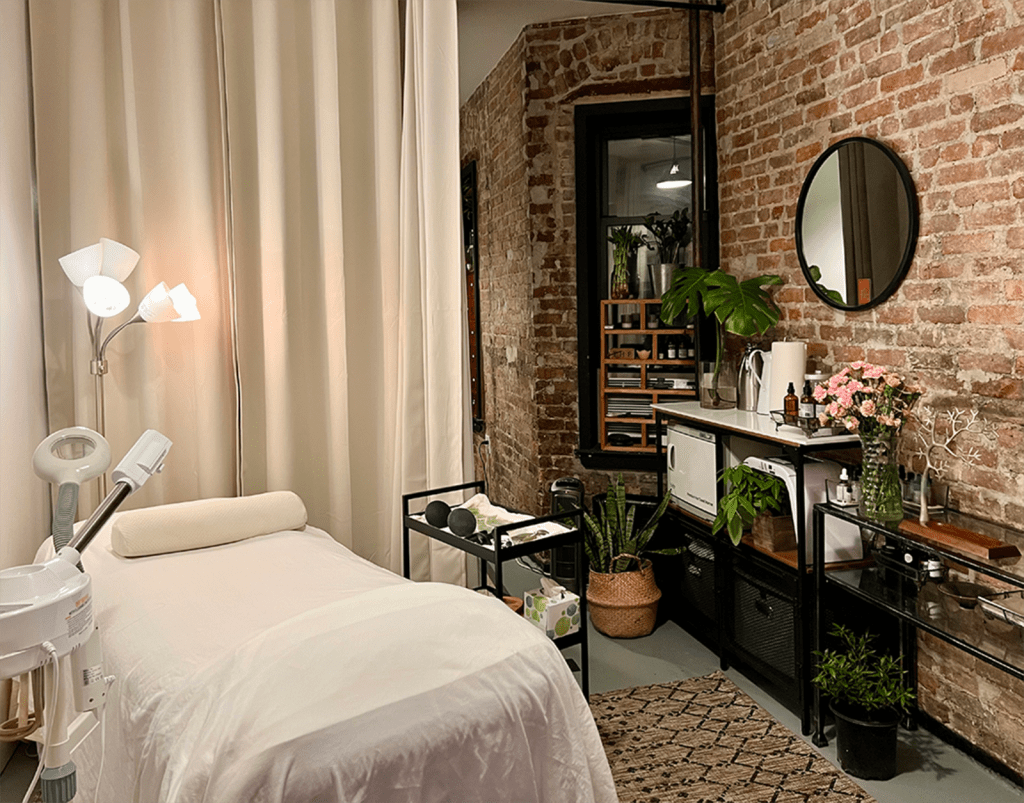
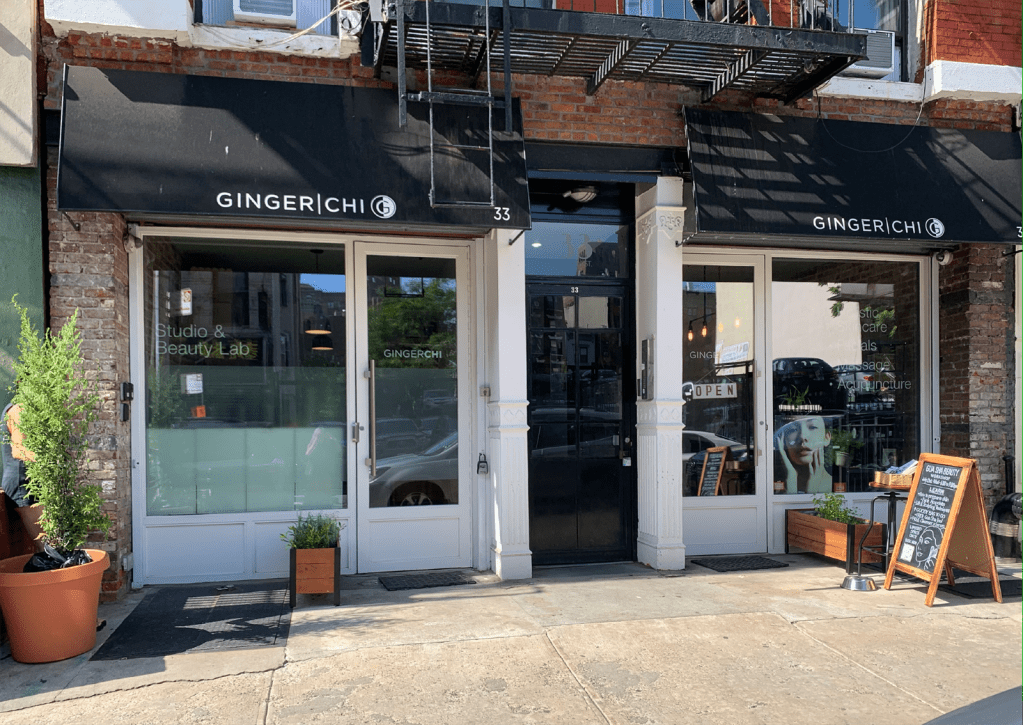
Lam first launched the Gingerchi online on Etsy in 2011 and after 7 years, she opened her first brick-and-mortar in Chinatown. During the pandemic, she moved to her 780 sq feet store to offer spa treatments like gua sha facials and massages to complement her products that use ginger oil, camelia oil and rice bran. “Not only do we cleanse the skin using our plant-based products it but offers a unique, rejuvenating experience,” Lam says.
Gua sha, pronounced “gwah-shah,” originates from the Chinese word for scraping. The ritual involves using a gua sha tool typically made of stone to apply pressure on the skin using a stroking motion. In the past couple of years, gua sha has grown in popularity, claiming to be a natural alternative to Botox that sculpts the face and gives a youthful appearance.
“By applying the gentle scraping of gua sha to the skin covering the troubled area, this helps with lymphatic drainage, improve blood circulation and promote healing.” says Gabriella Valdez, a certified aesthetician and facialist. “Many of my clients believe that it will completely change their face shape, but you need to do it every day to achieve results. After a few weeks of consistent repetition, you can notice a healthy glow in the skin.”
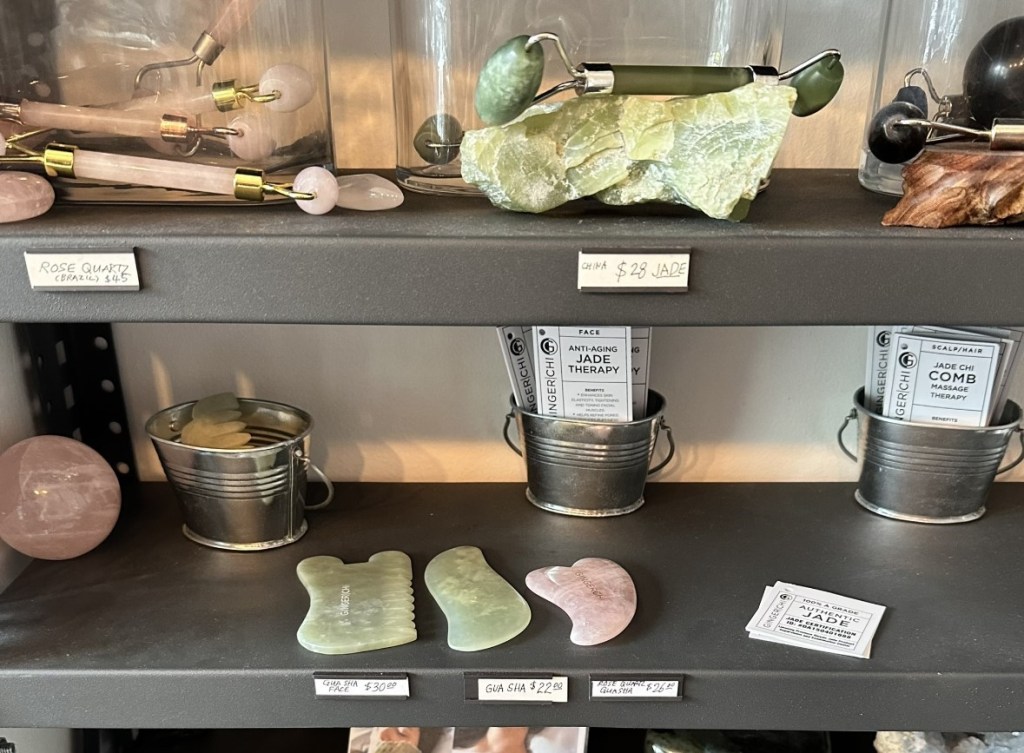
With the ritual, many should be approached with caution. Jerry Lin DACM, Dipl.OM, L.Ac, traditional Chinese medicine practitioner and staff member at the Holistic Healing Center at Nemacolin tells Vogue, “Individuals should be skeptical of claims that go beyond its established therapeutic effects. Consulting with a healthcare professional and seeking a trained practitioner can help ensure a safe and effective gua sha experience.”
Michelle Han, DAOM, L.Ac, traditional Chinese medicine (TCM) practitioner and co-founder of Potion Lab, says that when done incorrectly, there is a chance of bruising, discoloration, or severe muscle soreness. She would not recommend gua sha for those taking blood thinners or anyone with thin skin.
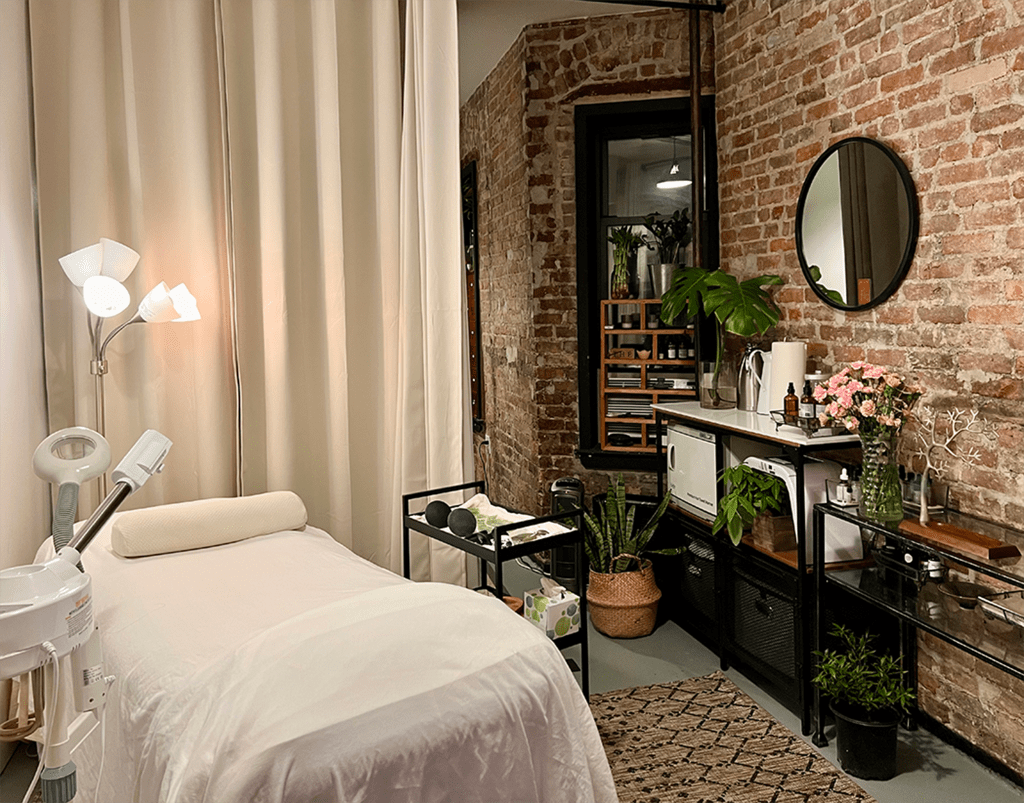
Lam, who holds the treatments in the back of her shop, also manages her business alone. “I’m a one woman show,” Lam says proudly, “I take all the marketing photography and write the blog on the website myself.” Right now, Lam hopes to find a bigger space to accommodate more customers and hire more licensed practitioners. “I have a small, intimate space that holds two beds for our massages. We are seeing more enthusiasm for facials with summer season approaching and we want to welcome everyone we can.”
Works Cited:
Choi, Lily and Bess Koutroumanis. Heal Yourself with Traditional Chinese Medicine. Salem, MA 2023.
“Meet Anna, Founder of Gingerchi” https://gingerchi.com/pages/meet-anna
“Ingredients” weibeauty.com/pages/ingredients
“Cha Ling” http://www.lvmh.com/houses/perfumes-cosmetics/cha-ling/
Jin, Meng and Audrey Noble “The Expert Guide on How to Gua Sha” Vogue.com, 11 November 2023. http://www.vogue.com/article/gua-sha-history-at-home-self-care#:~:text=The%20Downsides,or%20anyone%20with%20thin%20skin.
 Nicole Tipon
Leave a comment